Kenyan SL28 Coffee: Why This Bean Has So Much Character

Among single-origin coffees, Kenyan SL28 holds a special place for many specialty coffee enthusiasts, particularly because of its intense acidity and red-fruit notes that can sometimes resemble blackcurrant.
Unlike many varieties developed mainly for yield or disease resistance, SL28 became famous primarily for its flavour. This article explains where the variety comes from, what makes it distinctive, and how to recognize its profile in the cup.
What Is Kenyan SL28 Coffee?
SL28 is an Arabica coffee variety developed in Kenya during the 1930s. Its name comes from Scott Laboratories, an agricultural research centre established during the British colonial period that tested dozens of plants to identify desirable qualities related to yield, resilience, and cup quality.
According to the World Coffee Research variety catalogue, SL28 was selected in 1935 from an individual plant within a drought-tolerant population originating in Tanzania. Its genetic lineage is now associated with the Bourbon family.
Where SL28 Comes From and Why Kenya Stands Out
SL28 grows mainly in the central Kenyan highlands, particularly in Nyeri, Kirinyaga, and Embu, at elevations ranging from approximately 1,500 to 2,100 metres. These conditions, combined with mineral-rich red volcanic soil, allow the variety to express its full aromatic potential.
Kenya also uses a distinctive washed process, sometimes described as double fermentation, that extends processing beyond the traditional washed method used in many other regions. The additional stage emphasizes clarity and intensity, contributing to Kenya’s reputation for bright and structured coffees.
The SL28 Tasting Profile
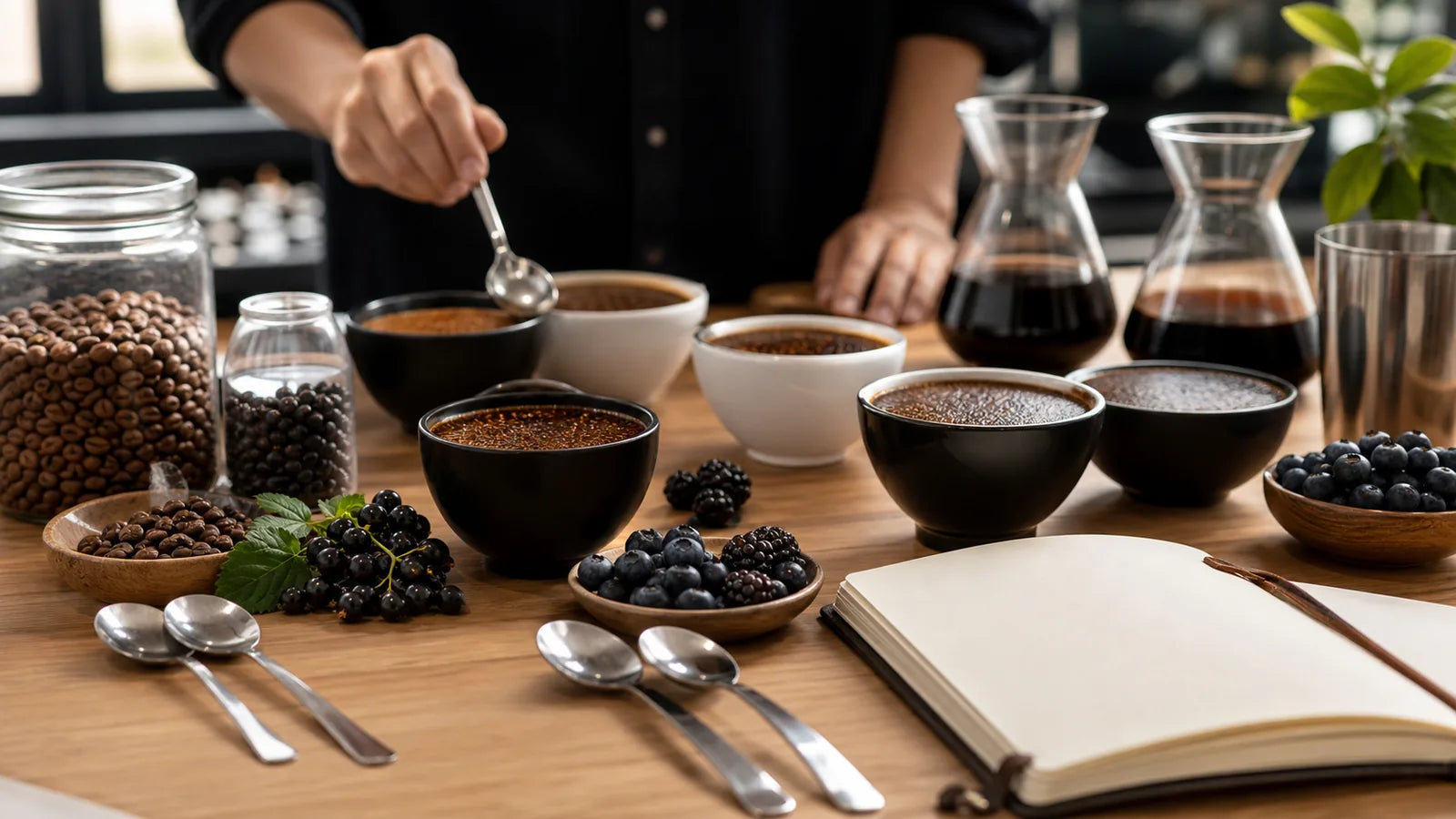
SL28 is known for one of the most intense aromatic profiles in specialty coffee.
| Characteristic | Description |
|---|---|
| Acidity | Bright, structured, and sometimes described as phosphoric |
| Dominant notes | Blackcurrant, red fruit, citrus |
| Body | Full, sometimes syrupy in texture |
| Distinctive quality | A savoury note that can occasionally resemble tomato |
This combination of lively acidity and intense fruit explains why SL28 is often used as a reference point when assessing other Kenyan coffees and why it remains highly sought after at Kenyan coffee auctions.
Want to compare this profile with other origins? Our guide to single-origin coffee and blends can help.
Why Coffee Enthusiasts Seek Out SL28
- An aromatic profile that is difficult to confuse with another variety
- Bright acidity balanced by a satisfying body
- A variety that remains rare outside Kenya
- An excellent reference for understanding the influence of terroir
- A unique and well-documented agricultural history dating to the 1930s
SL28 has also appeared in small experimental lots in Latin America, including Colombia and Guatemala, but the results vary. Many experts believe the variety expresses its full potential most consistently in its original Kenyan environment.
SL28 Compared with Other Varieties
Comparing SL28 with other popular varieties helps clarify its unique qualities. Bourbon, to which SL28 is genetically related, generally offers softer acidity and more pronounced sweetness. Caturra, a natural Bourbon mutation widely grown in Latin America, typically produces a more balanced profile with less fruit intensity than SL28.
The comparison demonstrates how strongly a variety’s expression depends on both genetics and terroir. An SL28 grown outside Kenya, for example in Central America, can taste noticeably different from one grown in the Kenyan highlands even though the botanical variety is technically the same.
This close relationship between variety and terroir makes Kenyan SL28 special and helps explain why attempts to reproduce its profile elsewhere rarely achieve the same complexity and aromatic intensity.
How to Brew SL28 for the Best Experience
Because of its pronounced acidity, SL28 is particularly well suited to filter methods such as V60 and Chemex, which give its aromatic complexity room to develop. A light to medium roast also preserves the intensity of the fruit notes, while a darker roast can hide part of the variety’s distinctive character.
If you are less accustomed to lively acidity, you can soften it slightly by using water at a lower temperature, around 90 to 92°C, or by reducing the contact time between water and coffee during brewing.
Conclusion
Kenyan SL28 demonstrates how a precise variety grown in the right environment can create an aromatic profile that is difficult to reproduce elsewhere. Its lively acidity and red-fruit notes make it an appealing origin for people who want to explore beyond softer coffee profiles.
The Bright Series features other single-origin coffees, the producer blog introduces the people behind each lot, and our single-origin versus blend guide provides additional context.
FAQ
What distinguishes Kenyan SL28 coffee?
Kenyan SL28 is an Arabica variety developed in Kenya during the 1930s and is recognized for lively acidity and intense blackcurrant and red-fruit notes. Its profile is difficult to reproduce elsewhere, even when the same variety is grown in another country. Its documented agricultural origin and strong relationship with Kenyan terroir are central to its reputation among coffee enthusiasts.
Is Kenyan coffee always acidic?
Many Kenyan coffees, especially those containing SL28 or SL34, do have pronounced acidity that is often described as bright and structured. The characteristic comes from a combination of terroir, high elevation, and local washed processing. Some lots can be softer depending on the processing method and the timing of the harvest.
Is SL28 suitable for espresso?
SL28 can be prepared as espresso, but its pronounced acidity makes it more demanding to extract correctly under pressure. Many roasters prefer to reserve the variety for filter brewing, which reveals its aromatic complexity more clearly. With accurate dosing and careful extraction, however, it can produce a compelling espresso for an experienced brewer.

David Boucher
Author
Founder - CEO
How to Choose a Coffee Machine for a Restaurant
How to Choose a Coffee Machine for a Restaurant
Read next article