How to Choose a Coffee Machine for a Restaurant

Investing in a coffee machine for a restaurant, cafe, or retail business is not a decision to take lightly. The equipment operates under pressure for several hours each day, directly affects the quality customers perceive, and often represents an investment of several thousand dollars.
Choosing the right commercial espresso machine requires looking beyond the advertised price. Expected service volume, staff experience, and long-term maintenance all matter. This guide presents the essential criteria for making an informed choice.
Essential Criteria Before Investing in a Restaurant Coffee Machine
The first factor to assess is the daily volume of coffee you expect to serve. An undersized machine will create lineups during peak periods, while an oversized machine represents unnecessary expense for a smaller establishment.
The number of groups, meaning the group heads that allow espresso shots to be extracted, directly determines service capacity. According to a specialized buying guide, commercial machines commonly offer one, two, or three groups. Two groups are generally recommended when an establishment needs to avoid delays during busy periods.
Extraction pressure is another important technical reference. As a detailed coffee machine guide explains, commercial espresso machines are generally designed to extract at approximately nine bars at the group, a standard associated with balanced espresso.
Automatic, Semi-Automatic, or Manual: Which Should You Choose?
Each machine type fits a different operating context based on staff involvement and the desired style of service.
| Machine Type | Barista Control | Best Suited To |
|---|---|---|
| Manual lever machine | Full control, extraction operated by hand | Specialty cafes with experienced staff |
| Semi-automatic | Manual dosing, automated pressure | Restaurants and cafes with trained baristas |
| Automatic with built-in grinder | One-touch automated extraction | High volume and frequent staff turnover |
| Super-automatic | Minimal control, fully automated | Self-service areas, waiting rooms, and lobbies |
The right choice depends mainly on the role coffee plays in your offer. An establishment where coffee is a featured product benefits from a semi-automatic machine that allows precise control. A business where coffee is secondary may be better served by a more automated machine.
Not sure which model fits your volume? Our equipment consultation service can support the selection and installation process.
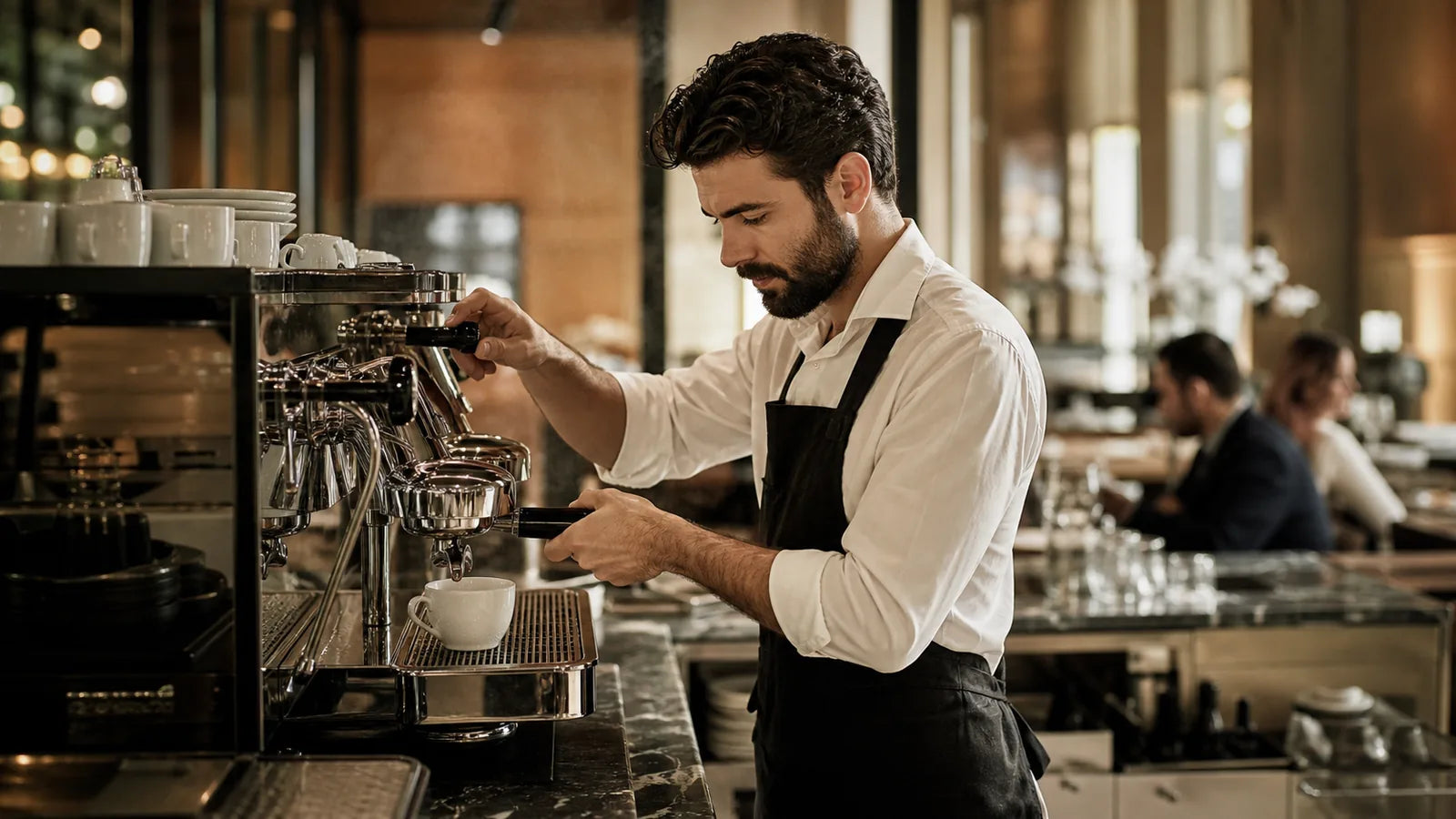
Matching the Machine to Service Volume
Before comparing specific models, answer a few practical questions to guide the decision.
- How many espresso-based drinks do you serve per day and during the busiest hour?
- Does your team already have espresso preparation experience, or will training be required?
- Is coffee central to your offer or a complementary service?
- Do you have enough counter space for both the machine and grinder?
- What budget is available for purchase, installation, and annual maintenance?
A good practice is to choose slightly more capacity than your current needs require so growth in customer volume does not force an early equipment replacement.
Maintenance and Advisory Service: Do Not Overlook Them
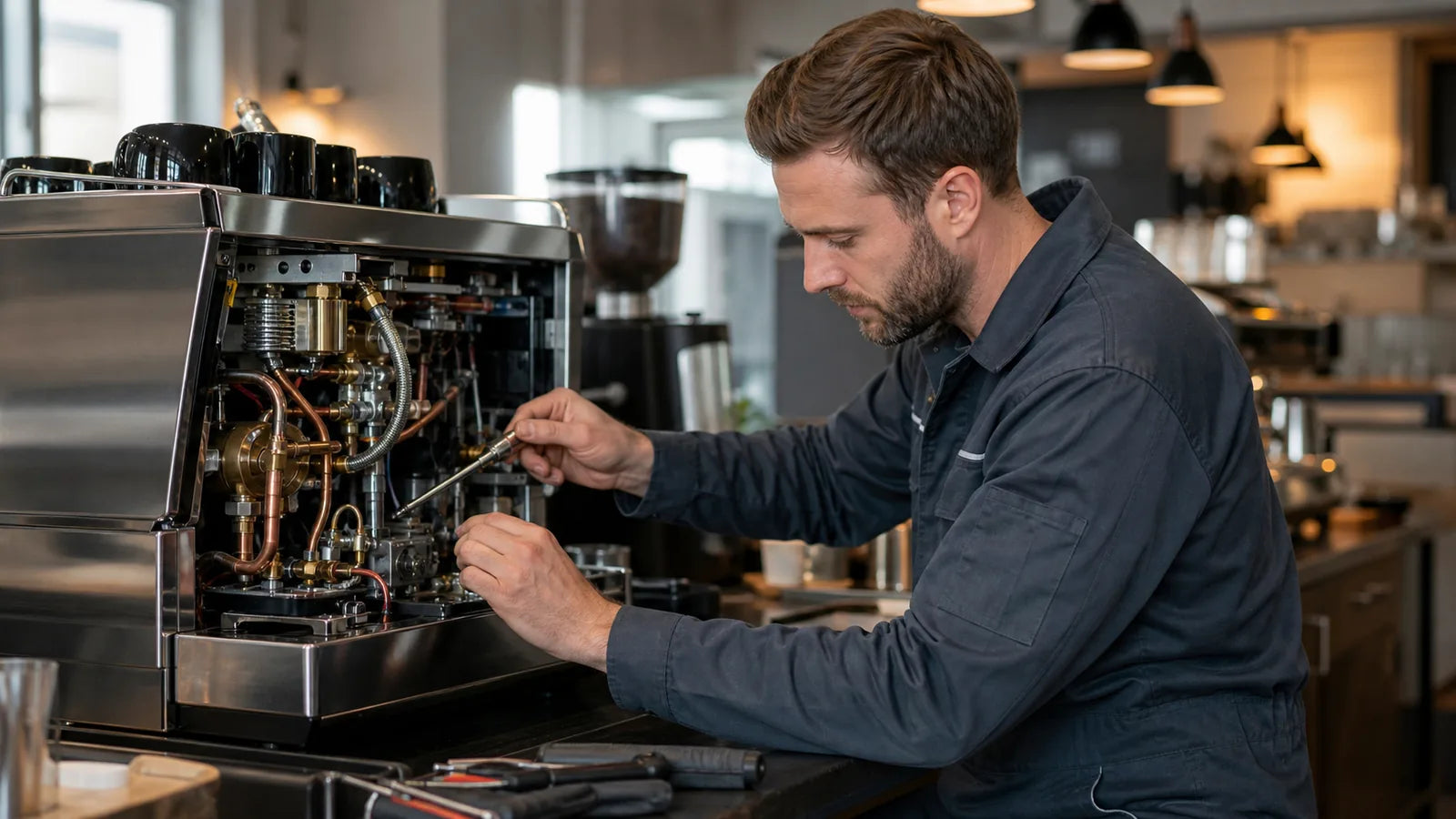
A commercial espresso machine operates under constant heat and pressure, so regular maintenance is necessary to preserve extraction quality and prevent breakdowns. Descaling, cleaning group heads, and inspecting seals are among the routine tasks.
Poor maintenance can quickly affect the flavour of the coffee, even when high-quality beans are used, and can lead to an expensive breakdown during service. Professional guidance that includes initial installation and a preventive maintenance plan can make a meaningful difference in the life of the equipment.
Supporting Equipment You Also Need
An espresso machine never works alone. A good grinder that matches the volume of your business is equally important to final coffee quality. An inexpensive or poorly maintained grinder can undermine the investment in a high-end machine because grind consistency directly affects extraction.
A precision scale, a properly fitted tamper, and a water filtration system complete the basic setup. Water quality is often overlooked even though it directly affects flavour and scale buildup inside the machine. Untreated water can accelerate wear and increase maintenance needs.
Planning for these supporting items from the beginning, rather than adding them later, generally produces more consistent results from opening day and avoids costly adjustments after the main equipment is already installed.
Budget and Return on Investment
The price of a commercial espresso machine varies considerably according to the number of groups, technology, and brand. In addition to the initial purchase price, plan for recurring costs such as maintenance, wear parts, and staff training.
A consistently prepared espresso from a reliable and well-maintained machine contributes directly to customer loyalty. In many businesses, the coffee offer becomes a point of differentiation, making a higher initial investment in dependable equipment more sensible than an entry-level machine that may need early replacement.
Conclusion
Choosing an espresso machine for a business requires an honest assessment of service volume, staff experience, and the role coffee plays in the overall offer. Reliable equipment that is properly maintained can remain a profitable investment for many years.
Our equipment and consultation services support machine selection and maintenance, while the commercial account form lets you discuss the specific needs of your establishment.
FAQ
Which restaurant coffee machine is best for modest volume?
For a small restaurant with moderate volume, a two-group semi-automatic espresso machine generally offers a good balance of quality, control, and service capacity. It can handle peak periods without excessive lineups while allowing a trained barista enough control to serve consistent espresso, even when the establishment becomes busy.
Is a plumber required for installation?
In most cases, yes. A commercial espresso machine generally requires a water connection and drain, along with suitable electrical service that may be three-phase depending on the model. These requirements should be assessed before the purchase to avoid costly surprises during installation, particularly in an existing kitchen or occupied commercial space.
How much does commercial espresso machine maintenance cost?
Maintenance cost varies according to the model and intensity of use. Plan an annual budget for descaling, replacement of seals and wear parts, and regular preventive service. Consistent maintenance is usually less expensive over time than a major repair or premature replacement caused by neglected routine care.

David Boucher
Author
Founder - CEO
Best Coffee for Camping: What to Bring Outdoors
Best Coffee for Camping: What to Bring Outdoors
Read next article