Colombian Specialty Coffee: Regions, Varieties and Profiles

Colombian coffee is one of the world’s best-known origins, yet it is often reduced to a simplified image of a mild and balanced coffee without much distinction. Colombian specialty coffee tells a far richer story shaped by diverse regions, varieties, and processing methods.
This article explores what distinguishes Colombian specialty coffee from standard commercial Colombian coffee, along with the major producing regions and the varieties that shape its flavour in the cup.
Why Colombia Is a Reference for Specialty Coffee
Colombia grows Arabica coffee exclusively, unlike several producing countries that cultivate both Arabica and Robusta. According to official Café de Colombia information, the country has 17 producing regions at elevations ranging from approximately 900 to 2,300 metres, each with distinct soil, climate, and harvest conditions.
This geographic diversity, combined with a long tradition of agricultural research led by the Federación Nacional de Cafeteros, has allowed Colombia to develop varieties adapted to local conditions while maintaining a reputation for dependable quality in international markets.
Major Coffee-Producing Regions
Here is an overview of several leading Colombian specialty coffee regions.
| Region | Elevation | Typical Profile |
|---|---|---|
| Huila | 1,200 to 2,000 m | Fruit-forward, lively, and well-defined acidity |
| Nariño | 1,500 to 2,300 m | Sweet with citrus notes |
| Cauca | 1,400 to 2,100 m | Balanced with red-fruit notes |
| Coffee Axis: Caldas, Quindío, and Risaralda | 1,200 to 1,800 m | Chocolate-forward, balanced, and classic |
Many areas also benefit from two harvest periods per year, making fresh coffee available during much of the year. This is a relatively uncommon advantage among specialty coffee-producing countries.
Want to explore other precise origins? Our single-origin versus blend guide helps compare profiles.
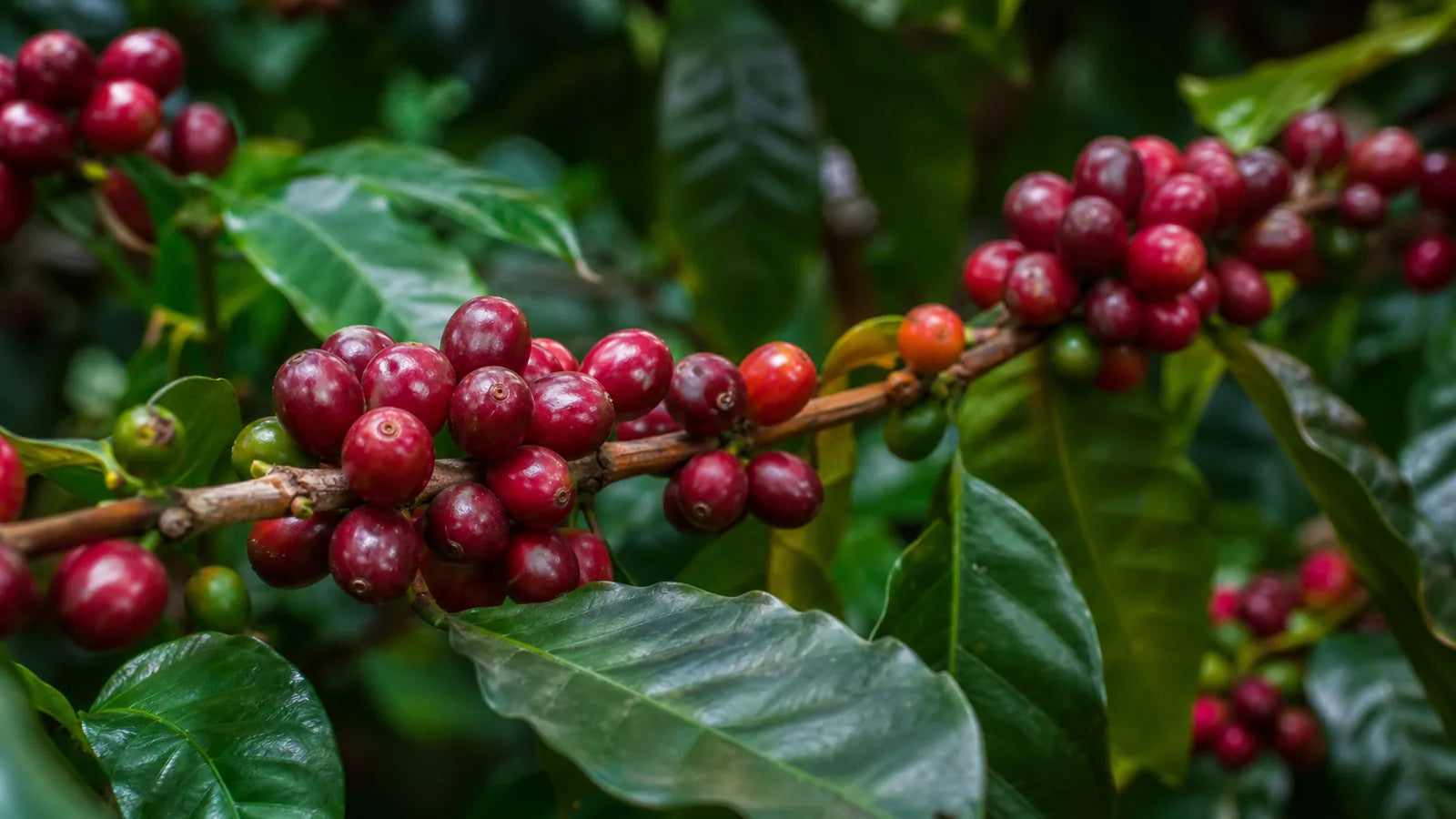
Coffee Varieties: From Caturra to Castillo
- Caturra: a natural Bourbon mutation with a balanced profile and notes of chocolate and caramel
- Castillo: a variety developed by Cenicafé for resistance to coffee leaf rust, with profiles ranging from fruity to chocolate-forward
- Typica and Bourbon: historic varieties that are less widespread today but remain on selected farms
- Tabi: a hybrid combining Typica, Bourbon, and disease resistance, with bright acidity and good complexity
- SL28: a Kenyan variety cultivated in small quantities in Colombia, offering a rarer and more distinctive profile
Castillo is now the most widely cultivated variety in Colombia, largely because of its resistance to coffee leaf rust, a disease that significantly affected the country’s harvests in the early 2010s. According to detailed analyses of Colombian varieties, Castillo can range from fruity and sweet to more chocolate-forward while remaining broadly balanced.
The Washed Process: A Colombian Signature
Most Colombian coffees use the traditional washed process, which emphasizes clarity and cleanliness in the cup. Some producers now experiment with longer fermentations or honey processing, which can add body and sweetness.
The range of processing methods, combined with diverse regions and elevations, explains why two Colombian coffees can taste very different even though the country is broadly associated with consistency.
The Role of Small Producers
Unlike countries where large estates dominate production, Colombian coffee depends heavily on small family farms, often passed down from one generation to the next. This structure influences specialty coffee quality because producers can pay close attention to selective harvesting and post-harvest processing.
It also explains why traceability matters so much. Knowing the farm, precise region, and producer behind a lot helps consumers understand its profile and provides greater confidence that the price reflects the work invested in cultivation.
Many specialty roasters prefer direct relationships with producers rather than buying anonymously on the spot market, an approach that can support both quality and better compensation for the people behind each cup.
How to Recognize Good Colombian Specialty Coffee
A good Colombian specialty coffee generally has moderate but well-defined acidity, medium body, and notes of milk chocolate, caramel, or red fruit depending on the region and variety. Limited bitterness and a pleasant sweetness in the finish are also useful indicators of quality.
Standard commercial Colombian coffee, often blended without precise traceability, tends to offer a flatter profile with fewer of the nuances associated with an identifiable region or lot.
Conclusion
Colombian specialty coffee extends far beyond the simplified idea of a mild and predictable coffee. Its regions, varieties, and processing methods produce a range of profiles worth exploring beyond familiar assumptions.
The producer blog introduces Colombian producers, the specialty coffee collection provides opportunities to explore the current selection, and our single-origin versus blend guide offers more context.
FAQ
What makes Colombian specialty coffee distinctive?
Colombian specialty coffee benefits from a wide range of producing regions, elevations, and varieties, all based on Arabica coffee. This diversity, combined with a long history of agricultural research and two harvest periods in many areas, supports a varied and consistently high-quality supply that distinguishes Colombia from many other producing countries.
Is Colombian coffee always washed?
Most Colombian coffee is washed, a process known for producing clarity in the cup. Some producers are experimenting with longer fermentations or honey processing to create more body and sweetness. These alternatives remain less common but are becoming increasingly popular among experimental specialty producers.
What is the best coffee region in Colombia?
There is no single best region because each one offers a different profile. Huila is known for lively fruit-forward coffees, Nariño for sweetness and citrus, and the Coffee Axis for more classic chocolate-forward profiles. The best choice depends on your preferred level of acidity and the flavours you want in the cup.

David Boucher
Author
Founder - CEO
Choosing a Specialty Coffee Supplier for Your Restaurant
Choosing a Specialty Coffee Supplier for Your Restaurant
Read next article