Choosing a Specialty Coffee Supplier for Your Restaurant

Coffee is often the last thing a customer consumes before leaving a restaurant, making it an important final point of contact in the overall experience. Yet choosing a specialty coffee supplier for a restaurant is sometimes treated as less strategic than other purchasing decisions.
The right specialty coffee supplier can make a meaningful difference in both perceived quality and day-to-day operations. This article outlines the main criteria to consider when selecting a coffee partner for your establishment.
What a Good Specialty Coffee Supplier Should Offer
A restaurant coffee supplier does more than deliver bags of beans. According to a guide to choosing restaurant suppliers, important criteria include food-safety standards, flexibility, delivery times, payment terms, and order tracking.
Beyond logistics, a strong coffee partner should support your team technically, including equipment selection, staff training, and choosing a coffee profile that fits your menu and service model.
Quality, Traceability, and Consistency
- Does the supplier identify the coffee’s precise origin rather than offering an untraceable blend?
- Is the coffee freshly roasted and suited to your brewing method, whether espresso or filter?
- Can the supplier maintain consistent quality from one order to the next?
- Does the company support equipment selection and maintenance rather than only selling coffee?
- Is customer service responsive when an urgent issue occurs?
Traceability deserves particular attention. A supplier that can identify the region, and sometimes the producer behind a specific lot, generally provides a stronger guarantee of quality and consistency than a bulk distributor with limited origin information.
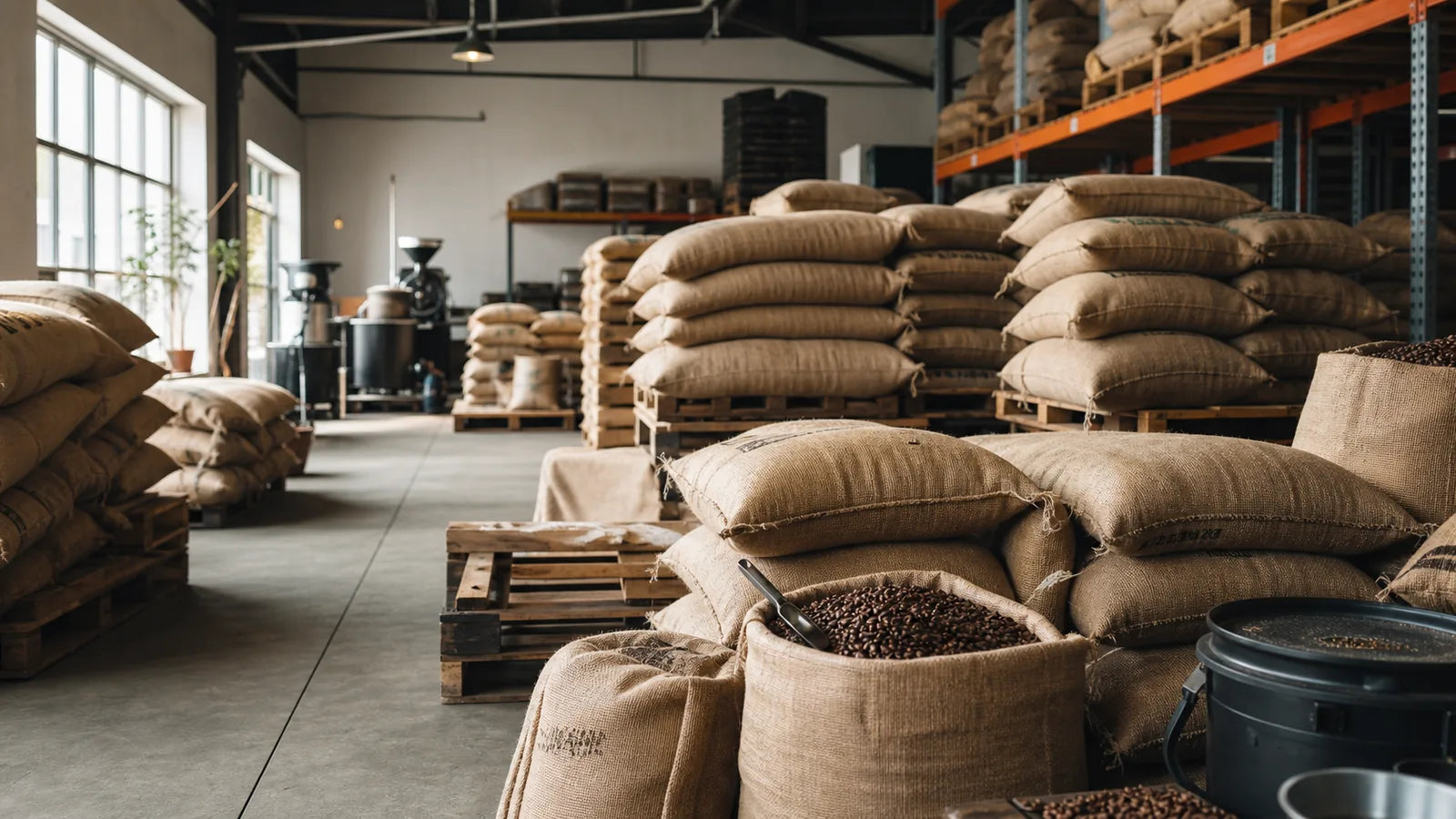
Local Roaster or General Distributor?
| Criterion | Local Roaster | General Distributor |
|---|---|---|
| Traceability | Generally high, with a precise origin | Variable and sometimes limited |
| Freshness | Recently roasted with fast delivery | Depends on warehousing time |
| Customization | Possible, including custom profiles | Often standardized |
| Volume and logistics | Varies according to the roaster’s size | Generally optimized for high volume |
A local roaster often offers an advantage in freshness and direct communication, making adjustments easier. A general distributor may be better suited to establishments with extremely high volumes or specialized logistical requirements.
To discuss your specific needs, use the commercial account form to begin a conversation without obligation.
Service, Training, and Support
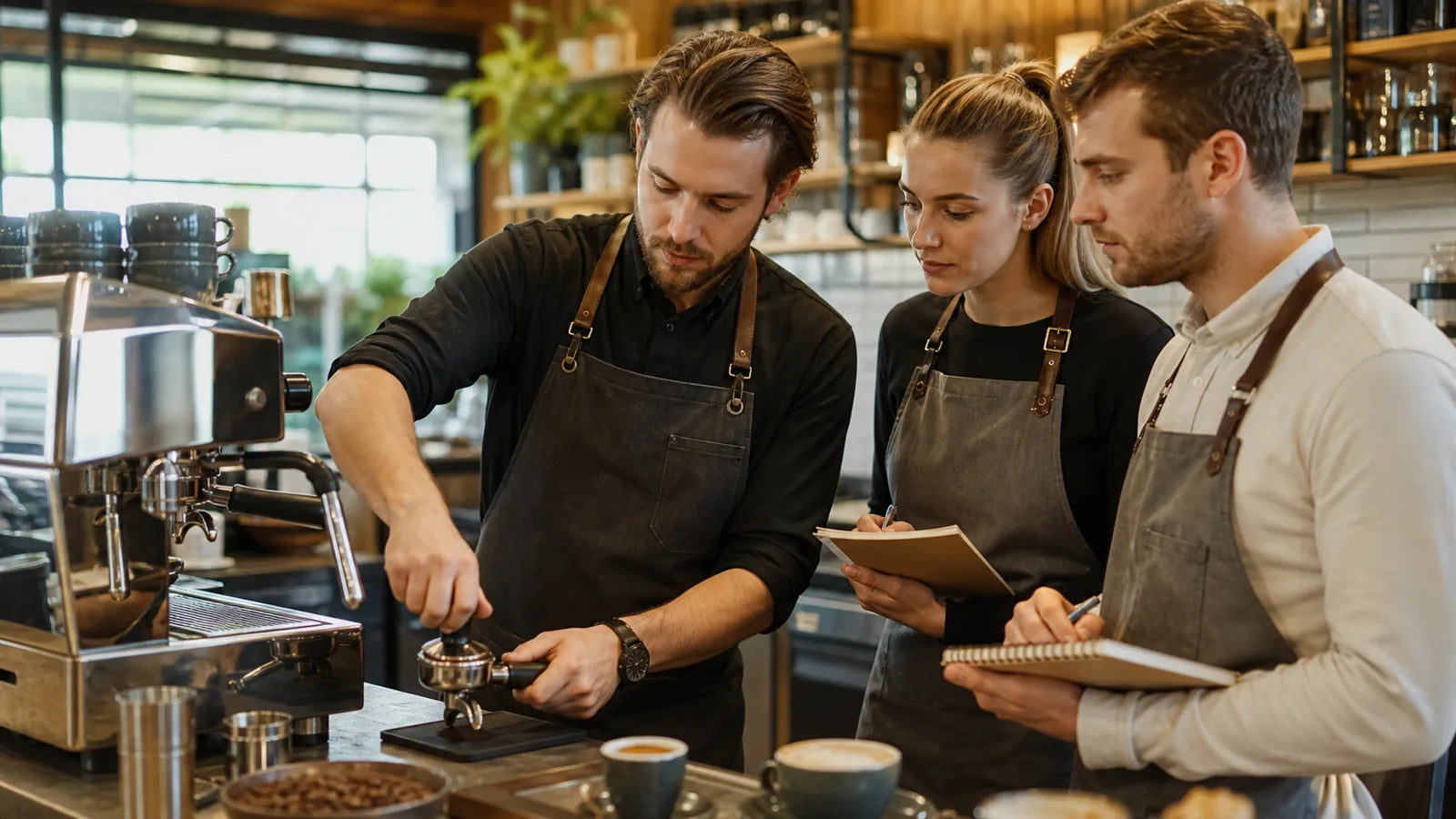
According to an article about choosing a coffee partner for hospitality, staff training should be included and repeated regularly, especially in workplaces with frequent employee turnover. A good partner provides initial instruction as well as refresher training when seasons or staff change.
After-sales support is equally important. A machine failure during a busy service can directly affect revenue, making the supplier’s response time an important part of the decision.
How to Start a Wholesale Relationship
Most roasters use a straightforward process to open a commercial account. The restaurant usually completes a form describing the establishment, estimated volume, and equipment requirements. Samples are often provided so the coffee profile can be evaluated before committing to regular orders.
Negotiating a trial period of a few months also makes it possible to adjust volumes and selections before entering a longer-term arrangement. This approach is especially useful for new establishments that are still learning about customer demand and consumption patterns.
Adapting the Offer to Your Establishment
A neighbourhood café that makes coffee central to its identity does not have the same needs as a fine-dining restaurant where coffee simply closes the meal. In the first case, rotating origins and seasonal profiles can help retain a knowledgeable customer base.
When coffee is a secondary offering, consistency and ease of execution often matter more than variety. One reliable profile that every employee can prepare well may be more practical than rotating coffees that complicate training and increase the risk of errors during busy periods.
Discussing these priorities openly with a prospective supplier from the beginning helps shape an offer that fits your actual context instead of relying on a standardized solution.
Conclusion
Choosing a specialty coffee supplier for a restaurant requires looking beyond the price of each bag. Traceability, freshness, technical support, staff training, and after-sales service often determine the long-term value of the partnership.
Browse the wholesale catalogue, learn how to become an Escape partner, or use the wholesale account form to begin a commercial relationship.
FAQ
How should a restaurant choose a specialty coffee supplier?
Start by assessing the traceability of the coffee, roast freshness, and the supplier’s ability to support your expected volume and brewing method. Technical support, including staff training and equipment service, is just as important as bean quality when you need to deliver a consistent customer experience.
What is the difference between a local roaster and a distributor?
A local roaster generally provides stronger traceability and fresher coffee because roasting and delivery happen closer to the restaurant. A general distributor may be better suited to very high-volume establishments or complex logistics, but often provides less customization for the coffee profile.
Is there a minimum volume for opening a wholesale account?
Requirements depend on the supplier, but many roasters offer plans for both small and large establishments. It is often possible to begin with a modest volume and adjust orders over time as customer demand and daily service patterns become clearer.

David Boucher
Author
Founder - CEO
Decaf Coffee Without Synthetic Chemicals: The Sugarcane EA Process
Decaf Coffee Without Synthetic Chemicals: The Sugarcane EA Process
Read next article