Light, Medium or Dark Roast: How to Choose

When you are looking at a shelf of coffee, it can be difficult to know whether a bag labelled light, medium, or dark roast is really what you want. Yet this one detail can completely change the flavour in the cup, sometimes even more than the origin of the bean.
The difference between light and dark roast goes far beyond colour. Roast level influences acidity, body, aromatic notes, and even how caffeine strength is perceived. This guide explains the differences between the main roast levels and how to select the one that best fits your habits.
Light vs Dark Roast: What Changes?
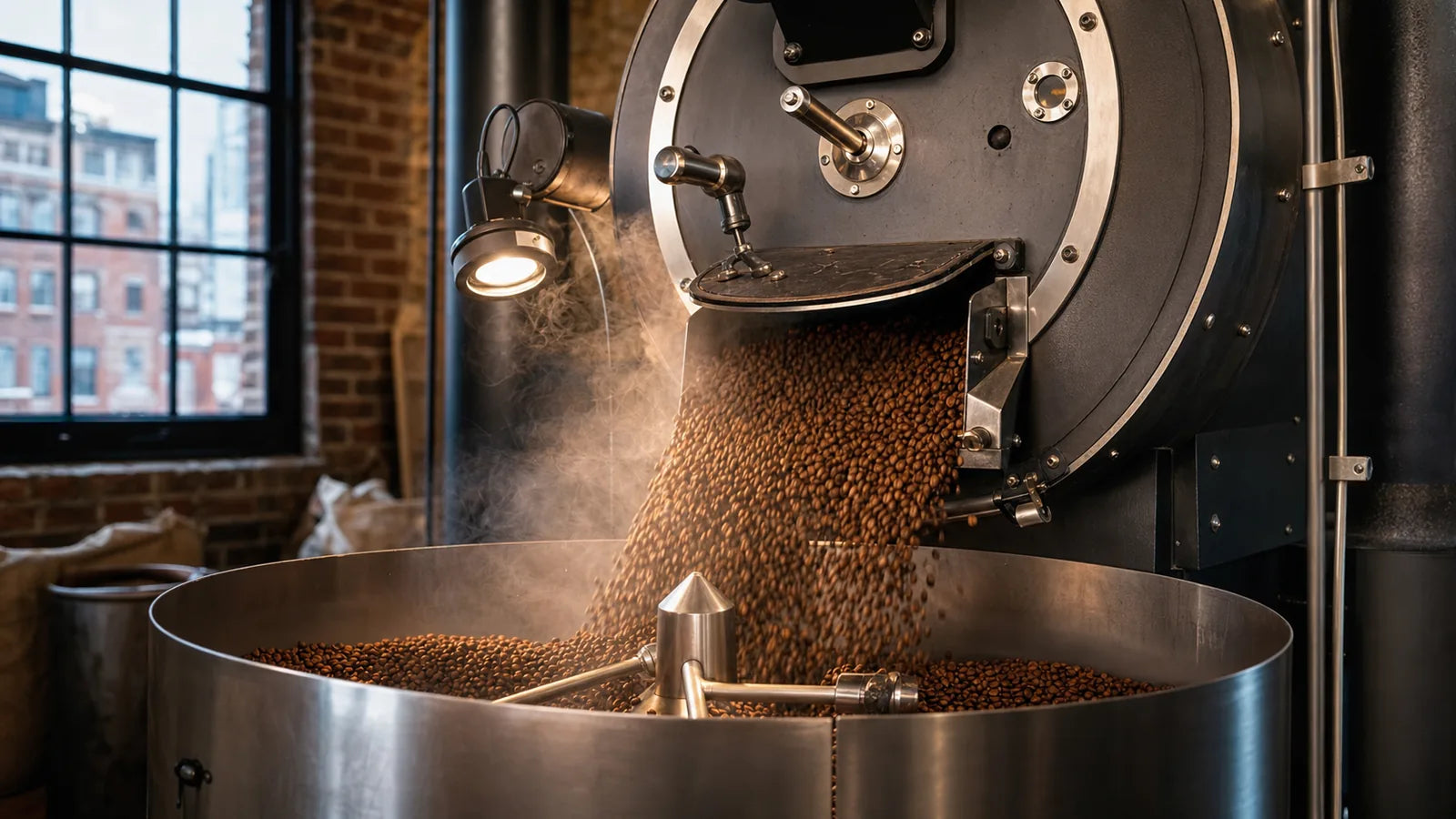
Roasting transforms green coffee, which has little recognizable coffee flavour, into an aromatic bean ready to be ground and brewed. Heat triggers a chemical process known as the Maillard reaction, browning the bean and creating hundreds of aromatic compounds.
The further the roast progresses, the more deeply these reactions transform the bean’s natural sugars and acids. That gradual transformation explains why the same coffee can taste completely different depending on the roasting profile chosen by the roaster.
Roast level is generally evaluated according to roasting time and temperature, along with the moment when the beans are removed from the roaster, often just before or after what is known as second crack, a subtle audible cracking of the beans.
Differences Between Light, Medium, and Dark Roasts
Here is an overview of the main differences between the three broad roast levels used in specialty coffee.
| Roast Level | Bean Colour | Acidity | Body | Typical Notes |
|---|---|---|---|---|
| Light | Light brown, dry surface | High and lively | Light | Floral, fruity, citrus |
| Medium | Medium brown | Moderate | Round and balanced | Caramel, hazelnut, milk chocolate |
| Dark | Dark brown to nearly black, oily surface | Low | Full-bodied | Dark chocolate, smoke, spice |
These categories are general reference points rather than absolute standards. Each roaster adjusts the roast curve according to the bean’s origin and the intended profile, which is why two medium-roast coffees can still taste noticeably different.
For more guidance on brewing at home, our guide to preparing specialty coffee covers grind size and coffee-to-water ratios for different roast levels.
How Roast Level Influences Flavour
Acidity and Body
A light roast preserves more of the coffee’s natural acids, creating a brighter and livelier cup. A dark roast breaks down more of these acids, reducing the perception of acidity while creating a heavier mouthfeel, partly because oils migrate toward the surface of the bean.
A medium roast falls between the two, balancing perceptible acidity with a rounder body. It is often a comfortable starting point for people who are discovering specialty coffee.
Aromatic Notes
Light roasts allow more of the characteristics associated with origin to remain noticeable, such as floral notes in an Ethiopian coffee or fruit-forward notes in a Kenyan coffee. Dark roasts develop flavours produced by the roasting process itself, including burnt caramel, dark chocolate, and smoke, which can overshadow the distinctions of origin.
For that reason, coffees intended to highlight a precise terroir are generally roasted lighter. Espresso blends and everyday coffees are often roasted darker to create a more consistent and full-bodied profile from one lot to the next.
Which Roast Should You Choose?
- If you prefer lively, fruity, or floral coffee, choose a light roast
- If you enjoy a round and balanced coffee without extremes, choose a medium roast
- If you want a full-bodied coffee for espresso or milk drinks, a dark roast often stands up better
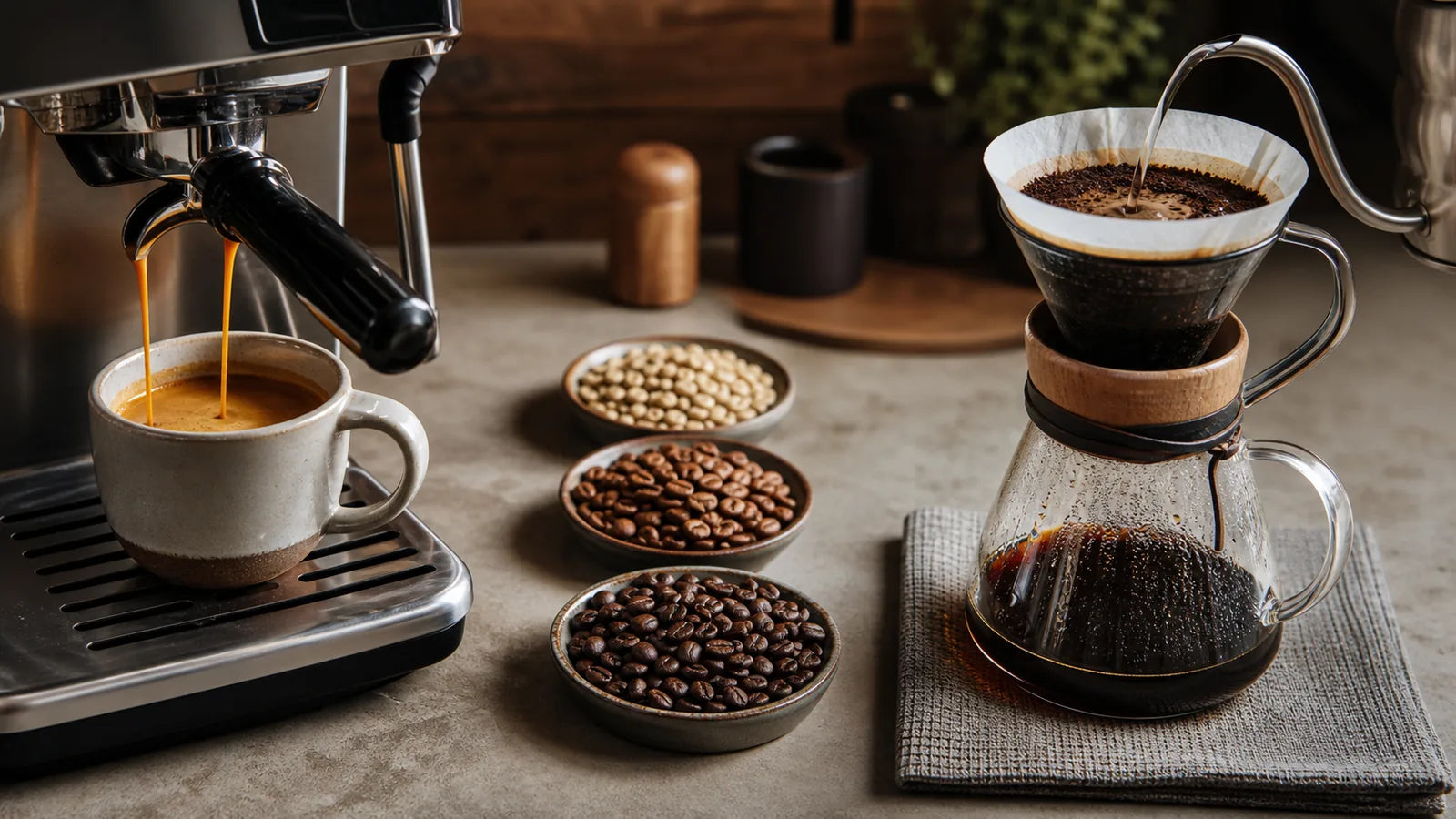
- If you brew manually with a filter, light to medium roasts are generally well suited to the method
- If you are unsure of your preferences, start with a medium roast as a versatile compromise
How to Identify Roast Level on a Bag
Most roasters indicate the roast level directly on the package, but the terminology varies from one brand to another. Some use light, medium, and dark, while others prefer terms such as filter, omni, or espresso, which describe the intended use more than the exact roast level.
When the package is not clear, the appearance of the beans provides a useful clue. A dry, matte, light-brown bean generally indicates a light roast, while a shiny, almost black bean suggests a dark roast. It is also helpful to taste the coffee black, without milk or sugar, so you can evaluate its acidity and body before deciding what you prefer.
Keeping notes about coffees you have enjoyed and their roast levels can make future purchases easier instead of starting from zero with every new bag.
What About Caffeine?
Contrary to a common belief, dark roast does not necessarily contain more caffeine than light roast. A university study on coffee roasts indicates that the relationship depends on brewing conditions. At the same dose and using the same method, light roast generally produces more caffeine in the cup, while under different extraction conditions, dark roast can sometimes yield more.
The perception that dark coffee is stronger mainly comes from its bolder and more bitter flavour, not necessarily from higher caffeine content. As comparative analyses also explain, caffeine differences depend on whether coffee is measured by weight or volume because beans lose mass and expand during roasting.
Conclusion
Choosing between light, medium, and dark roast depends mainly on your preferences for acidity, body, and brewing method. No roast level is universally better; each simply highlights different aspects of the coffee.
The Warm Series offers round and balanced profiles, while the Dark Series is suited to people who prefer a fuller-bodied coffee.
FAQ
What is the caffeine difference between light and dark roast?
The caffeine difference between light and dark roast depends mainly on brewing conditions and how the coffee is measured. Using the same dose and method, light roast often produces slightly more caffeine in the cup. Dark roast tends to feel stronger because of its bolder and more bitter flavour, not necessarily because it contains significantly more caffeine.
Which roast is the least acidic?
Dark roast is generally perceived as the least acidic because prolonged heat breaks down more of the bean’s natural acids. Light roast preserves those acids and creates a brighter cup. If acidity is uncomfortable for you, a medium to dark roast is often a gentler option, particularly when coffee is consumed on an empty stomach or over several cups.
Which roast is best for espresso?
Medium to dark roasts are generally easier to use for espresso because they produce a denser body and balanced bitterness under pressure. Many specialty roasters now use lighter roasts for espresso to highlight origin and acidity, but they require more precise grinding and extraction. The best choice ultimately depends on the flavour profile you want and your experience with espresso.

David Boucher
Author
Founder - CEO
How to Store Coffee Beans and Keep Them Fresh
How to Store Coffee Beans and Keep Them Fresh
Read next article