How to Prepare Specialty Coffee at Home

The world of specialty coffee may fascinate you, but preparing specialty coffee at home can seem complicated and expensive. It does not have to be.
You do not need to invest in a high-end machine to make an exceptional cup. The secret lies mainly in a few key principles and a good understanding of the fundamentals.
This guide will help you make barista-quality coffee at home using simple, accessible equipment.
Preparing Specialty Coffee at Home: The Essential Foundations
Before discussing coffee makers or techniques, it is important to understand that the quality of your coffee depends on three inseparable elements:
- The beans: freshness, origin, and quality directly affect the aromas
- The water: its composition and temperature influence extraction
- The grind: it determines the brewing speed and balance in the cup
Mastering these three foundations gives you a strong starting point for consistently good coffee.
Choosing Specialty Coffee Beans
Everything begins with the beans. Choose coffee from a quality roaster to benefit from better beans, traceability, and a more complex flavour profile.
Freshness is especially important when brewing at home. Coffee generally reaches its best flavour between 14 and 40 days after roasting. For a reliable starting point, our coffee collections offer approachable, delicious coffees that are always freshly roasted.
The Importance of Water Quality
A cup of coffee is more than 98% water, so its quality directly affects the final taste. Very hard water, which contains a high mineral concentration, or water with a noticeable chlorine flavour can hide the coffee’s subtler qualities. Filtered water or low-mineral spring water, at approximately 125 to 150 ppm, is ideal.
Temperature is equally important when preparing specialty coffee at home. The ideal range is approximately 94°C to 98°C, or 195°F to 205°F. A simple method is to bring the water to a boil, then wait 30 to 60 seconds before using it.
Grind Size: The Step That Changes Everything
Grind size determines the surface area exposed to water and therefore the extraction speed. Each brewing method requires a specific grind size, and using the wrong one is one of the fastest ways to produce an unbalanced cup.
Ideally, grind your beans immediately before brewing. A burr grinder is one of the best investments for a serious coffee enthusiast because it produces a more uniform grind than a blade grinder, which chops the beans unevenly. Consistency is essential for an even extraction.
The Coffee-to-Water Ratio: A Recipe for Success
One of the best-kept barista habits is using a scale. Measuring by eye may work in cooking, but coffee rewards precision. The ratio between coffee and water determines the strength and concentration of the drink.
The industry standard, often called the Golden Ratio, generally falls between 1:15 and 1:18. This means using 15 to 18 grams of water for every gram of coffee.
Here is a simple starting guide for a cup of approximately 300 ml:
| Ratio | Coffee | Water | Result |
|---|---|---|---|
| 1:15 | 20 g | 300 g | More concentrated and textured |
| 1:16 | 19 g | 300 g | Balanced and complex; a good starting point |
| 1:17 | 18 g | 300 g | Delicate coffee with greater clarity |
Experiment with these ratios to find what suits your palate. Adjusting the ratio is one of the simplest and most effective ways to control the taste of your coffee.
Three Simple Methods for Exceptional Coffee
You do not need expensive equipment to prepare specialty coffee at home. These three manual methods are affordable, relatively easy to learn, and capable of showcasing the full potential of your beans.
French Press
This is one of the simplest and most direct methods, and it works well with a wide variety of coffees. The Warm Series is particularly well suited to it.
Basic recipe:
- Use a coarse grind, similar to coarse salt.
- For 500 ml of water, use approximately 32 g of coffee.
- Pour the hot water over the coffee, do not stir, and let it steep for 5 to 9 minutes.
- Press the plunger slowly, but not all the way to the bottom, to avoid disturbing the sediment.
- Serve immediately to stop the extraction.
Manual Pour-Over
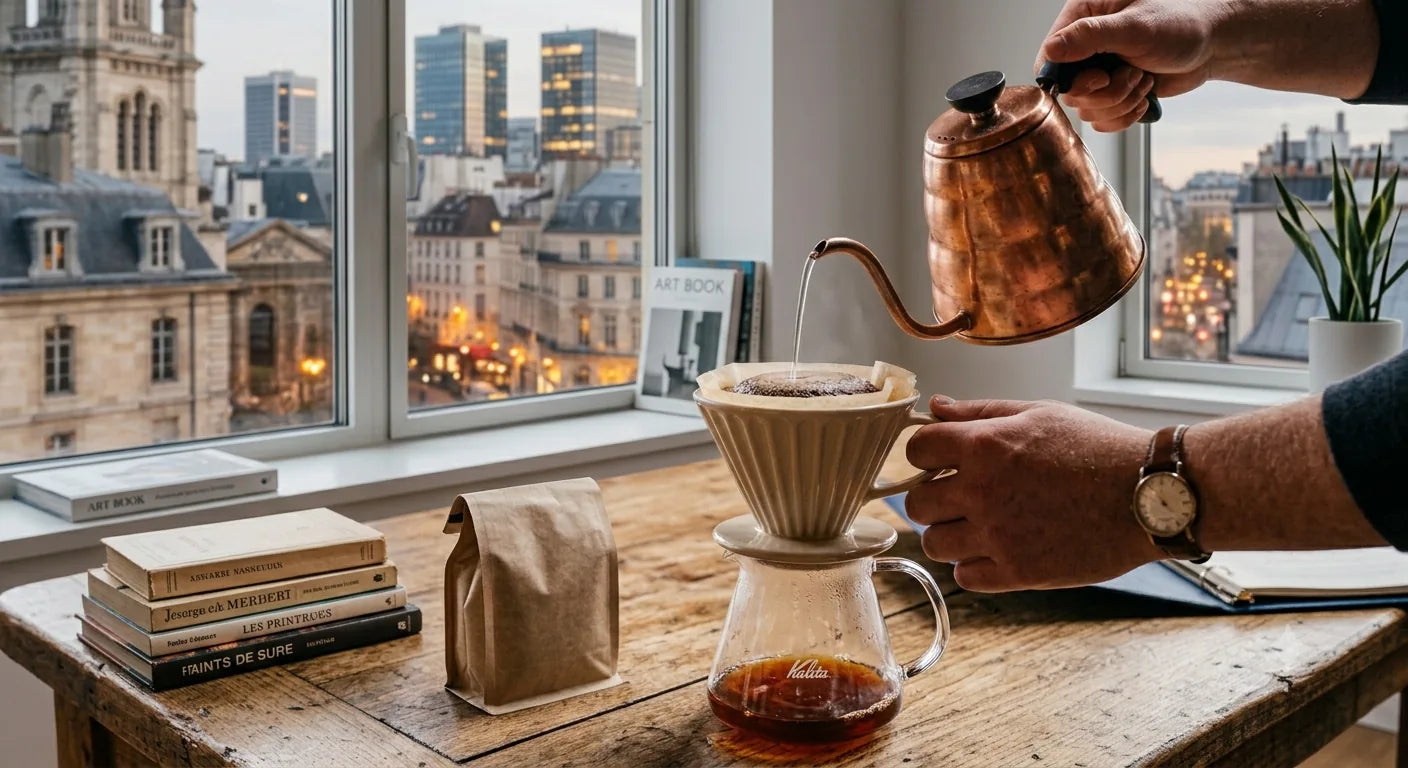
This method is a favourite among coffee purists because it offers precise control over every extraction variable. It produces a clear cup that highlights acidity and subtle aromatic notes.
Basic recipe:
- Use a medium-fine grind, similar to fleur de sel.
- Place the paper filter in the dripper and rinse it with hot water to remove any papery flavour.
- Add 20 g of ground coffee and bloom it with 40 g of water. Wait 30 seconds. This allows the coffee to release trapped gas and promotes even extraction.
- Slowly pour the remaining water, up to 320 g total, in concentric circles and in two equal stages. Aim for a total brew time between 3 minutes 30 seconds and 4 minutes.
Cold Brew
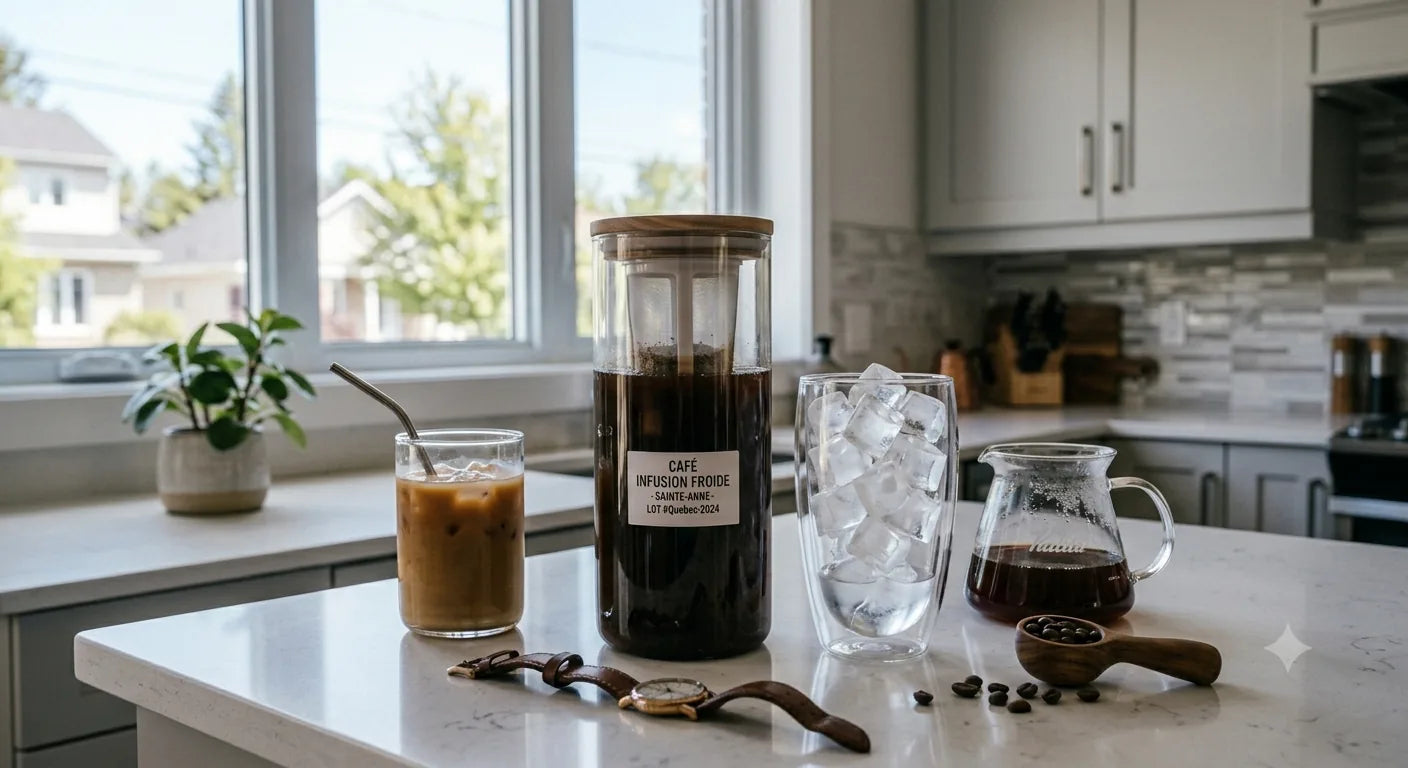
Ideal for warm days, cold brew is made by steeping very coarsely ground coffee in cold water for 12 to 24 hours. The result is smooth but concentrated. For a richer and more intense version, coffees from the Dark Series can provide a strong base.
Basic recipe:
- Use a ratio of 1:8, such as 100 g of coffee for 800 g of water.
- Combine the coffee and cold water in a jar and refrigerate for 18 hours.
- Filter the mixture through a coffee filter or cheesecloth.
- Serve the concentrate over ice and dilute it with water or milk to taste.
Conclusion
Preparing specialty coffee at home starts with mastering the fundamentals: quality beans, suitable water, a consistent grind, and a controlled ratio.
With a few simple adjustments, you can make an excellent cup without complicated equipment. The key is to experiment and adapt the recipe until you find the balance you prefer.
Explore our coffee selection or discover our coffee subscriptions to find coffees suited to your preferred brewing method.
FAQ
What are the basics of preparing specialty coffee at home?
Preparing specialty coffee at home starts with fresh coffee, quality water, the right grind for your brewing method, and an appropriate coffee-to-water ratio. By controlling these elements and testing small adjustments, you can make a balanced cup without advanced equipment or complicated techniques.
What equipment do you really need to get started?
A manual method such as a French press or pour-over dripper is enough to begin. A burr grinder is the most important piece of equipment because it creates a more consistent grind. A scale and gooseneck kettle can improve precision, but they are not essential at the beginning.
What is the most common coffee-brewing mistake?
The most common mistake is using a grind that does not match the brewing method, which leads to uneven extraction. Water that is too hot or an incorrect coffee-to-water ratio can also affect the taste. Small adjustments to these variables can significantly improve the cup.

David Boucher
Author
Founder - CEO
Ethiopian Yirgacheffe Coffee: Terroir, Profile and Tasting
Ethiopian Yirgacheffe Coffee: Terroir, Profile and Tasting
Read next article