How to Store Coffee Beans and Keep Them Fresh

Coffee that tastes like cardboard or has lost its aroma was not necessarily poor-quality coffee to begin with. In many cases, the problem is simply improper storage that allowed the beans to lose freshness before they reached the cup.
Storing coffee beans correctly makes a noticeable difference, whether you prepare espresso or filter coffee. This article explains why coffee loses freshness, how to store it properly, and how long it remains at its best.
Why Coffee Beans Lose Freshness
Coffee beans begin changing as soon as they leave the roaster. Two chemical processes are responsible for the gradual loss of freshness: degassing and oxidation.
Degassing is the release of carbon dioxide trapped in the bean during roasting. According to a detailed explanation of coffee degassing, this CO2 acts as a natural barrier that slows oxygen from entering the bean, but that protective effect gradually weakens in the days following roasting.
Once this protection decreases, oxidation becomes more significant. Oxygen reacts with the oils and aromatic compounds in coffee, gradually changing the flavour. As an overview of the science of coffee staling notes, measurable changes begin soon after roasting, while the most delicate aromatic notes start fading during the following days and weeks.
Best Practices for Storing Coffee
A few simple habits can significantly slow the loss of freshness.
- Store coffee in an airtight container, ideally one that is opaque
- Keep it away from direct light and heat
- Avoid opening the bag more often than necessary to limit oxygen exposure
- Grind coffee immediately before brewing rather than in advance
- Avoid repeatedly transferring coffee from one container to another
For more advice on freshness, our guide to choosing specialty coffee also explains how to identify a recent roast date.
Should Coffee Be Stored in the Fridge or Freezer?
The answer depends mainly on how soon you plan to use the coffee.
| Storage Method | Advantages | Disadvantages |
|---|---|---|
| Counter, airtight container | Convenient, quick access, no condensation | Optimal freshness is limited to a few weeks |
| Refrigerator | No meaningful advantage | Can absorb odours and develop condensation |
| Freezer, sealed portions | Greatly slows oxidation for long-term storage | Requires airtight packaging and portioned use |
In general, the refrigerator is not recommended because humidity and surrounding odours can affect the coffee. The freezer can be useful for storage over several weeks, provided the coffee is divided into sealed portions. This avoids repeated freeze-and-thaw cycles that can accelerate deterioration.
How Long Coffee Stays Fresh: Whole Bean vs Ground
Whole-bean coffee keeps its freshness much longer than ground coffee because a smaller surface area is exposed to air. When stored properly, whole beans are generally at their best for approximately two to four weeks after roasting, although they remain drinkable beyond that period.
Ground coffee loses a significant portion of its aroma within only a few days because grinding greatly increases the surface exposed to oxygen. That is why grinding immediately before brewing is preferable to buying large quantities of pre-ground coffee.
Signs That Coffee Has Lost Freshness
A few simple indicators can reveal that coffee is no longer at its best without requiring specialized equipment.
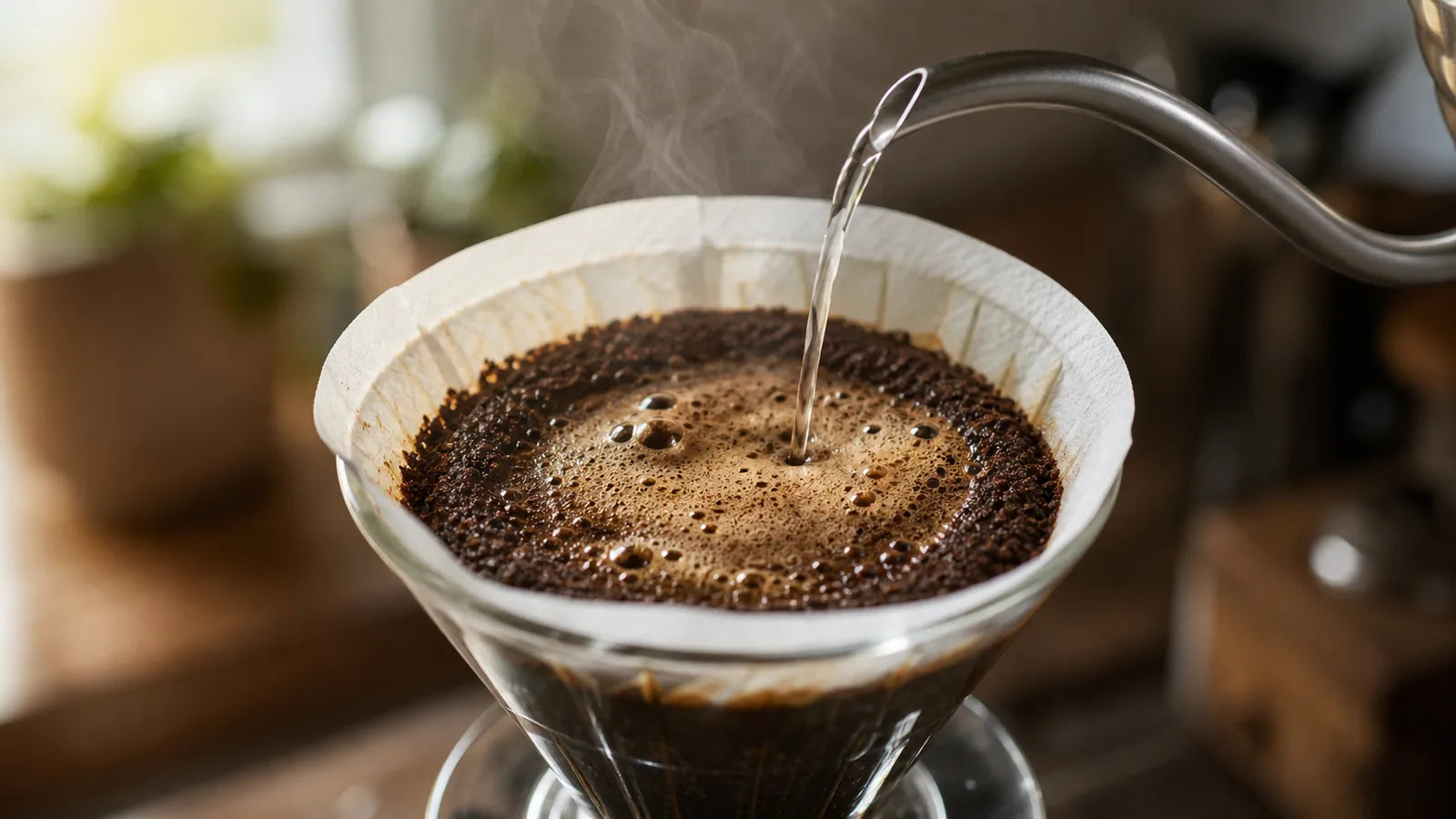
Fresh coffee releases a pronounced aroma when the bag is opened, while stale coffee often smells flat or nearly neutral. During brewing, fresh coffee also creates a visible foam known as the bloom, caused by CO2 still present in the beans. Little or no bloom can indicate that the coffee has moved beyond its peak freshness.
The Right Container Also Makes a Difference
Not all airtight containers provide the same protection. Clear glass may be convenient because you can see the contents, but it allows light to reach the coffee and can speed the degradation of compounds that are sensitive to ultraviolet rays. An opaque ceramic or metal container protects coffee more effectively over time.
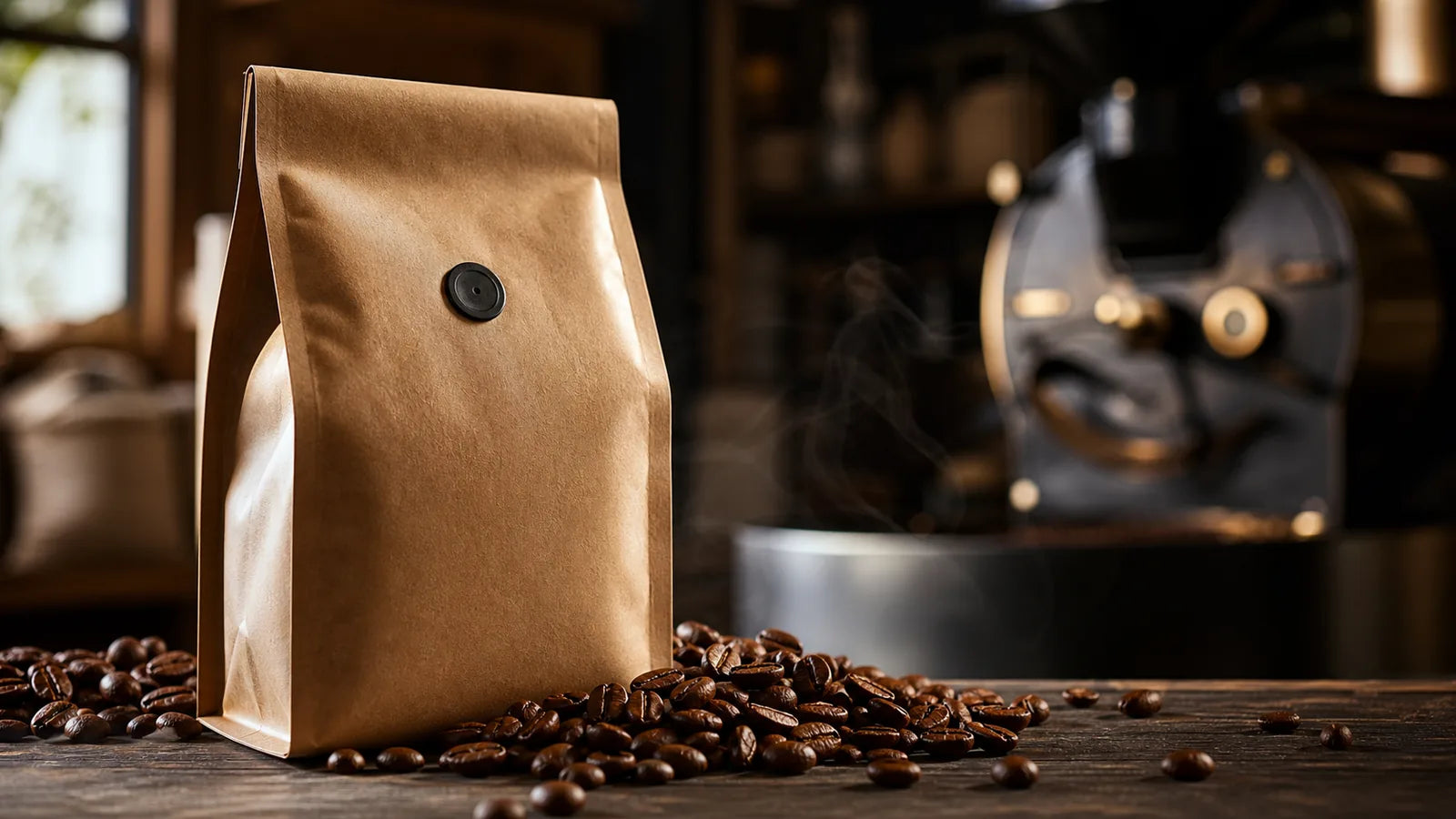
A degassing valve on the original bag is also useful. It lets CO2 escape without allowing oxygen to enter, extending optimal storage directly in the package. Once the bag has been opened, close it tightly after every use or transfer the coffee to a dedicated airtight container rather than leaving the bag partly open.
Conclusion
Storing coffee properly extends the roaster’s work all the way to your cup. An airtight container, protection from light, and grinding immediately before brewing are enough to preserve most aromas for several weeks.
Explore our freshly roasted coffee collection and our guide to preparing specialty coffee at home for more advice.
FAQ
How should coffee beans be stored after opening the bag?
Store opened coffee beans in an airtight, opaque container away from light and heat. Coffee begins oxidizing more quickly once the bag is opened and exposed to air. Whole beans still keep their aroma better than ground coffee, which can lose much of its character within only a few days. Closing the bag tightly after each use noticeably slows this process.
Should coffee be kept in the refrigerator?
No. The refrigerator is generally not recommended for coffee storage. Moisture can affect the texture of the beans, and coffee readily absorbs surrounding odours, changing its flavour. For everyday use, an airtight container kept at room temperature and away from light is a better choice for both whole beans and ground coffee.
How long does ground coffee stay fresh?
Ground coffee loses a significant amount of aroma within approximately three to five days, even when kept in an airtight container. Its larger exposed surface area allows oxidation to happen much faster than it does with whole beans. Grinding coffee immediately before brewing is therefore preferable, especially when buying enough coffee to last several weeks.

David Boucher
Author
Founder - CEO
Kenyan SL28 Coffee: Why This Bean Has So Much Character
Kenyan SL28 Coffee: Why This Bean Has So Much Character
Read next article