Espresso Beans vs Filter Coffee Beans: What Is the Difference?

Labels such as espresso beans and filter coffee beans can be confusing when you are looking at a coffee display. Are they different botanical varieties, different origins, or simply the same product marketed under two names?
In practice, the difference between espresso beans and filter coffee beans comes almost entirely from the roast profile rather than the bean itself. This article explains what distinguishes the two categories and how to choose based on your brewing method.
Is There Really a Difference Between Espresso and Filter Beans?
Technically, the same green coffee can be roasted for espresso or for filter brewing. The distinction does not come from a different botanical variety but from the roasting profile applied to the bean according to the intended extraction method.
According to a reference article on roasting for espresso and filter by roasting consultant Scott Rao, the difference between the two profiles can be relatively modest, yet still significant enough to change the result in the cup.
What Distinguishes Espresso from Filter Coffee?
The following table outlines the main differences between the two roast profiles beyond the simple colour of the bean.
| Aspect | Espresso Beans | Filter Coffee Beans |
|---|---|---|
| Roast | Generally more developed | Generally lighter |
| Solubility | Higher, suited to rapid pressure extraction | Lower, suited to slower extraction |
| Acidity | More subdued | Preserved and often brighter |
| Intended extraction method | Espresso machine under pressure | V60, Chemex, or French press |
These categories are guidelines rather than strict rules. Some roasters now offer lighter espresso roasts that highlight origin, while others use intermediate profiles known as omni-roasts that are intended to work for both espresso and filter methods.
For more detail on the relationship between roast and brewing method, read our guide to light, medium, and dark coffee roasts.
Can Filter Coffee Be Used for Espresso?
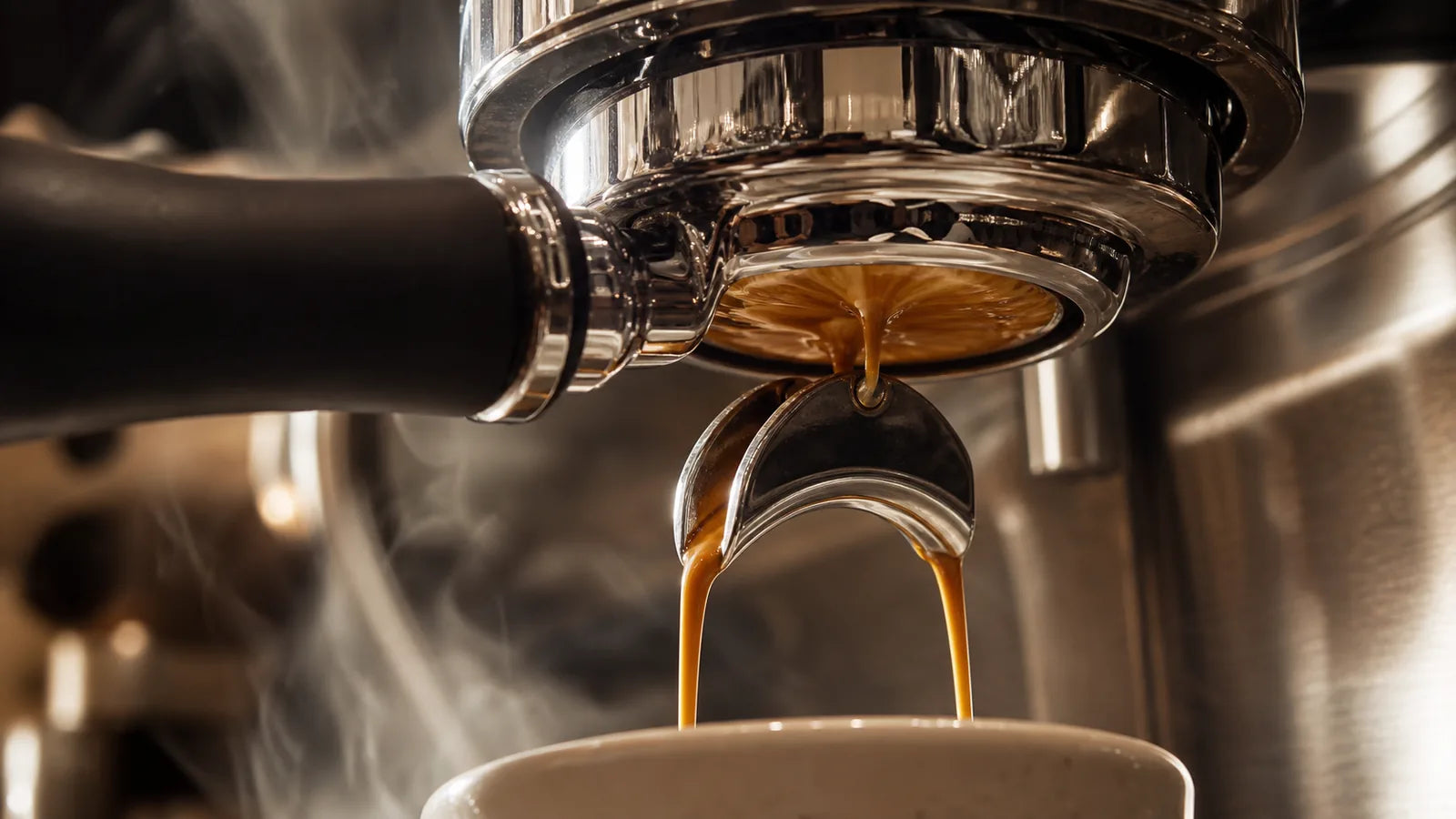
Technically, yes, but the result can be difficult to balance. A lighter filter roast is less soluble and may under-extract when prepared as espresso, producing a cup that tastes sharp or sour rather than round and sweet.
Conversely, espresso-roasted coffee can generally be brewed as filter coffee, although it may lack the liveliness and aromatic clarity associated with a good filter roast. As a specialized article on the subject explains, adjusting grind size can compensate for some differences, but roast profile remains a major factor.
Why the Confusion Persists
Much of the confusion surrounding espresso and filter beans comes from the history of espresso. Older machines and grinders produced less consistent results, so roasters often compensated with darker roasting to make extraction more dependable despite technical limitations.
Modern grinders and espresso machines are much more precise, allowing lighter roasts to be extracted successfully. Many specialty roasters now offer brighter espresso profiles designed to highlight origin rather than simply produce the robust flavour historically associated with espresso.
For that reason, an espresso or filter label often says more about the roaster’s intended use than it does about a universal rule that applies to every coffee.
How to Choose for Your Brewing Method
- If you use an espresso machine at home or work, choose coffee identified for espresso
- If you brew with a V60, Chemex, or French press, filter coffee is generally the better fit
- If you regularly use both methods, look for a versatile omni-roast
- If you prepare long coffee with an automatic machine or reusable capsule, an espresso roast is often preferable
- If you are unsure of your main method, a medium roast provides a reasonable compromise
Recommendations by Method
For espresso, a medium to dark roast such as those in the Dark Series generally offers the body and solubility needed for balanced pressure extraction. For filter methods, a light to medium roast such as the Warm Series allows more of the bean’s origin characteristics to remain noticeable.
If you alternate between methods, a medium roast is usually the most versatile option. Adjust grind size and the coffee-to-water ratio according to the method used on a given day.
Conclusion
The difference between espresso beans and filter coffee beans comes mainly from roasting rather than from a different variety or origin. The right choice depends on your primary brewing method rather than a universal rule.
The Warm Series is suited to filter brewing, the Dark Series is designed for fuller espresso profiles, and the complete specialty coffee collection offers options for every method.
FAQ
Can espresso beans be used for filter coffee?
Espresso beans can generally be used for filter coffee, although the result may lack some of the bright acidity and aromatic clarity associated with a filter roast. A filter roast used for espresso is more likely to under-extract and taste sharp. Grind size and ratio adjustments can help, but the roast profile still affects the final balance.
Are espresso beans always darker?
Not necessarily, although a darker profile remains common. Some roasters now offer lighter espresso roasts to highlight the coffee’s origin, provided grind size and extraction are adjusted precisely. A more developed roast is still more forgiving and easier for beginners to extract consistently at home.
What grind size should be used for home espresso?
Espresso requires a fine grind that creates enough resistance for an extraction lasting approximately 20 to 30 seconds. A grind that is too coarse produces a fast, under-extracted, sour shot, while an excessively fine grind can restrict water flow and create a bitter, over-extracted espresso. A quality burr grinder makes consistency much easier.

David Boucher
Author
Founder - CEO
Colombian Specialty Coffee: Regions, Varieties and Profiles
Colombian Specialty Coffee: Regions, Varieties and Profiles
Read next article